Alternate Reality Games
2023-10-11 19:35:48 UTC
The Alternate Reality Game (ARG) is one of my absolute favorite genres of game. It has largely vanished due to various issues and boy, do I miss them. I have participated in a number of ARGs and trace their lineage all the way back to 1979. All of the following pictures are from my own collection, where applicable.
I think ARGs can be best described as transmedia role-playing puzzle games. The core of the game is solving puzzles. You solve these puzzles often by playing the role of an investigator, government agent, treasure hunter, or an every day Joe who got caught up in a conspiracy. You typically will begin to solve these puzzles via the game's primary interface. Often, this is a computer. These puzzles are interesting for three reasons: they tend to be some of the hardest puzzles you'll find in gaming, they often require cooperation with other players, and they are often transmedia in nature.
ARGs break the boundaries of their primary interface. If the game presents itself as a video game, you may find yourself visting websites and real world locations outside of the game. You may find yourself sending and receiving phone calls in the real world. You may discover a video on YouTube or a person on Facebook which are, in fact, deliberate parts of the game but seem like any other YouTube video or Facebook profile. This is the "alternate reality" nature of the genre. You're playing a game that is pretending to be something more in the real world. Things in everyday life become part of the fiction and the story.
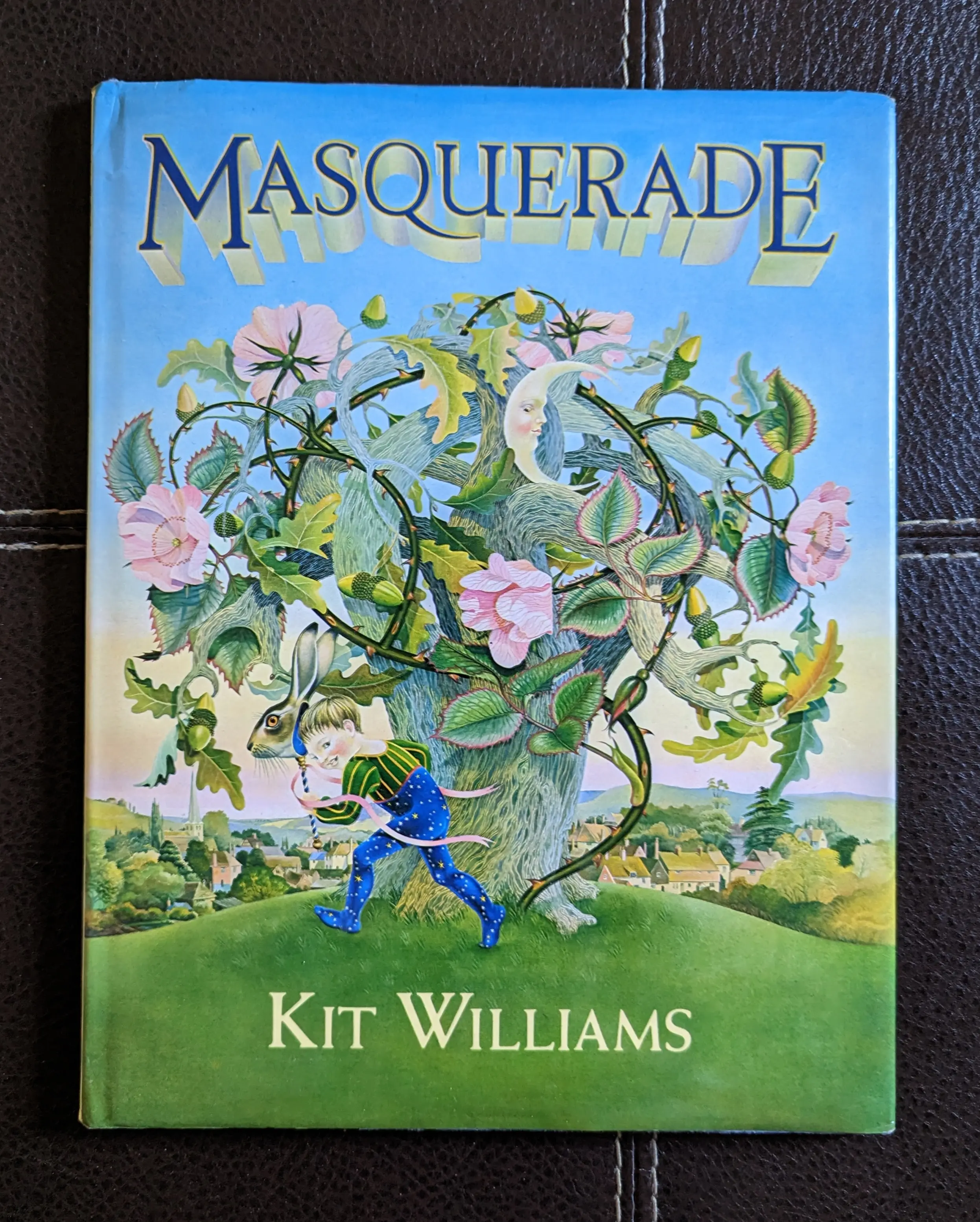
I got my feet wet with this type of game in elementary school. From the school library, I checked out a book titled Masquerade written by Kit Williams. The book was written in 1979 and was very upfront with its premise: the book itself is a puzzle. Your job as the reader is to solve the puzzle, travel to some real world location, and find the treasure. What an alluring premise.
I was captivated by this book as a child. Its solution was well out of my skill set at the time but just the idea that I was holding a book which was actually a game, and that game extended in to the real world, was absolutely marvelous.

Kit Williams would go on to create another one of these books in 1984. The book had no title. The goal of this game was to discover what the title was.
These books don't involve role play and aren't really transmedia. However, the idea of an everyday object being more than it appears was a seminal step toward the development of ARGs. Moreover, the fact that the prize of Masquerade required travel, and that the prize of the untitled book required sending something in the physical mail, are hints at the media boundary-breaking that ARGs would require.
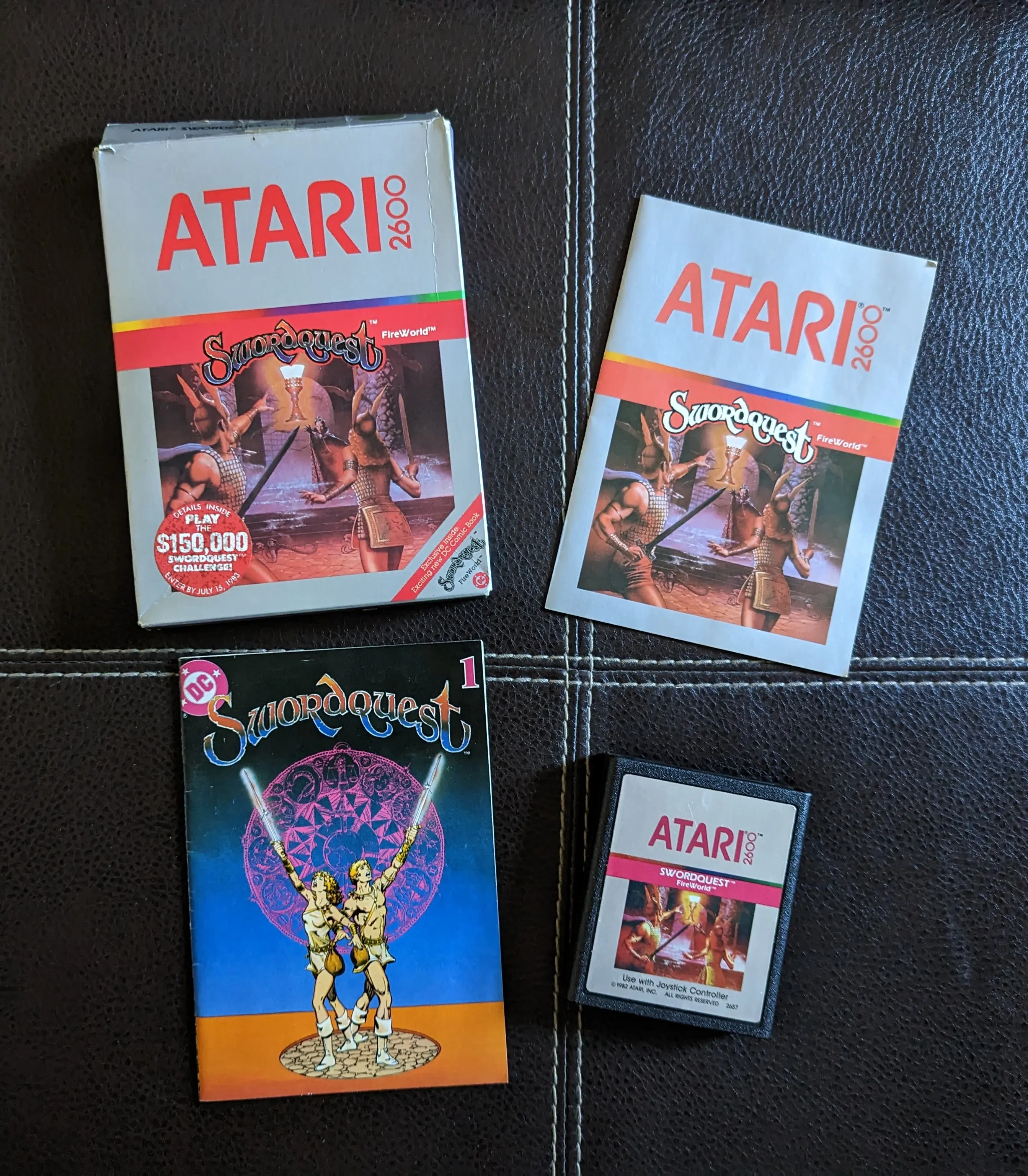
In 1982, Atari would release the first of four games in a series called Swordquest for the Atari VCS/2600. This first game, Swordquest: Earthworld, would come with a comic which explained the story of the game. However, the comic was also a clever element of the game itself.
The video game portion of Swordquest was an adventure game where the player would move from room to room and overcome both action-oriented and adventure-oriented challenges. Eventually, the player would reach rooms which provided numbers. These numbers were references to pages in the comic. On those pages were hidden words. Those hidden words, in turn, would point to further puzzles in the comic which would culminate in the player submitting a solution by mail to Atari. Winners would be invited to Atari HQ to compete in a special version of the game. The winner of that would then be invited back to compete against the winners of the three other games: Fireworld, Waterworld, and Airworld and crown (literally) a single champion. Due to financial troubles, Atari would cancel the Swordquest series without releasing Airworld. The contests as originally intended would end after the Fireworld championship. However, Digital Eclipse would develop and release Airworld as part of Atari 50: The Anniversary Celebration in 2022 (How wonderful!)
Swordquest is missing the element of role-play but the transmedia angle was a clear stepping stone toward the modern ARG.
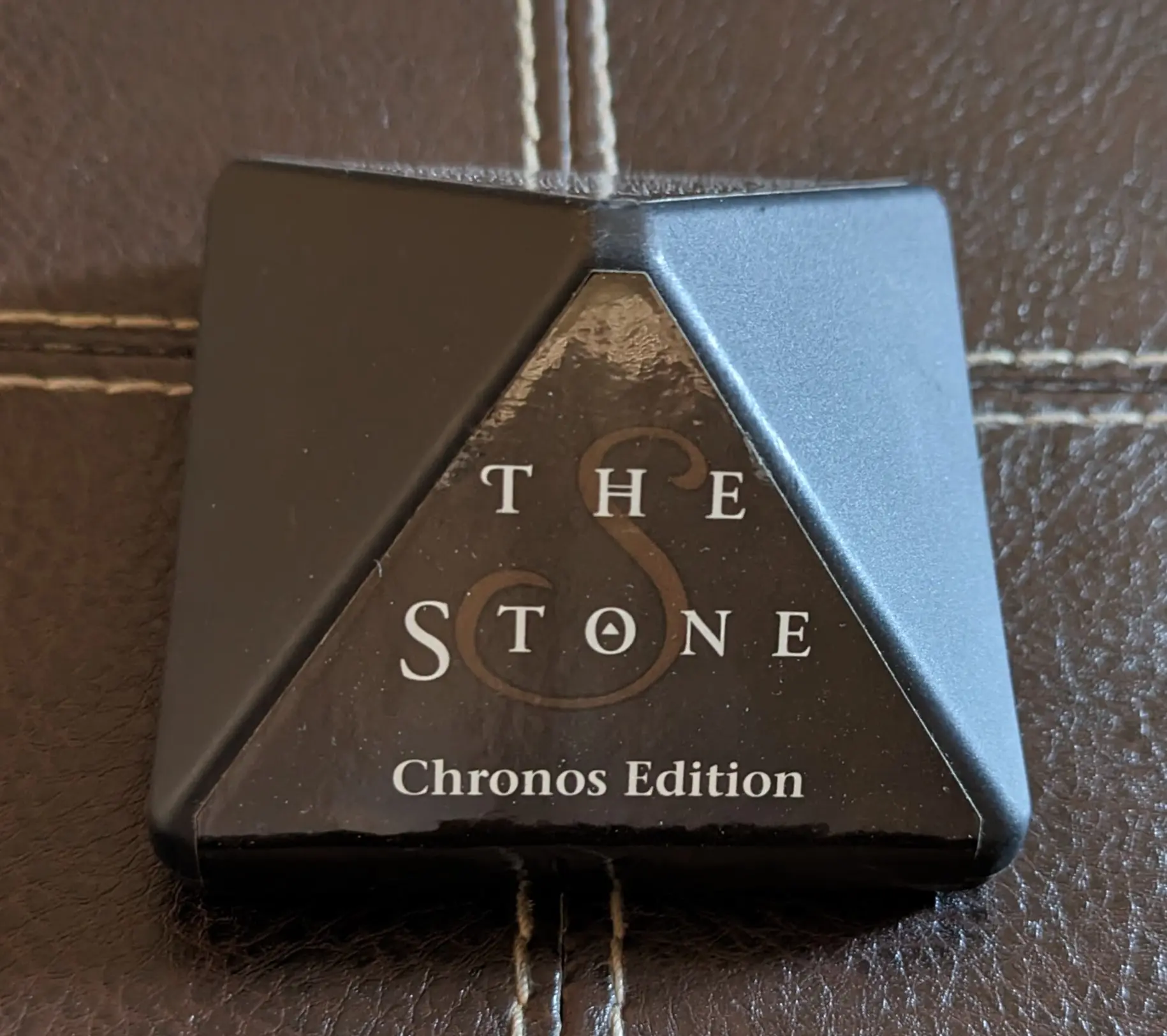
In 1997, I would have my first experience with an ARG-like game as (barely) an adult. The Stone was released as a little, virtually non-descript plastic pyramid. I saw it on a table in a department store. It was $20. Intrigued, I bought it, opened it, and found a stone with six symbols printed on it, along with a small document which led me to a website. That stone would be the password I would need to create an account and play the game. This blew my mind.
The puzzles were laid out as tiny little planar cut-outs of a large cube. You would click one of the outer-most puzzles, solve it, and then more puzzles on the inside would unlock. Each face of the the cube was a different category of puzzle. Some puzzles relied on other people. Some puzzles relied on another player who had your partner stone. The solutions of some puzzles acted as clues to solve physically connected puzzles deeper down the cube. The goal of the game was to solve the cube and discover the truth of the "Enigma."
Almost all of the solutions to the puzzles in The Stone required outside research. While this outside research was generally legitimate (as opposed to fabrications masquerading as legitimate real-world information), it was still very unique for its time. The idea of having to use the real world to facilitate your game play really set the early foundation for ARGs. You would do outside research, pool resources with fellow players, and once you started getting toward the center of the cube, there was even real world travel involved.
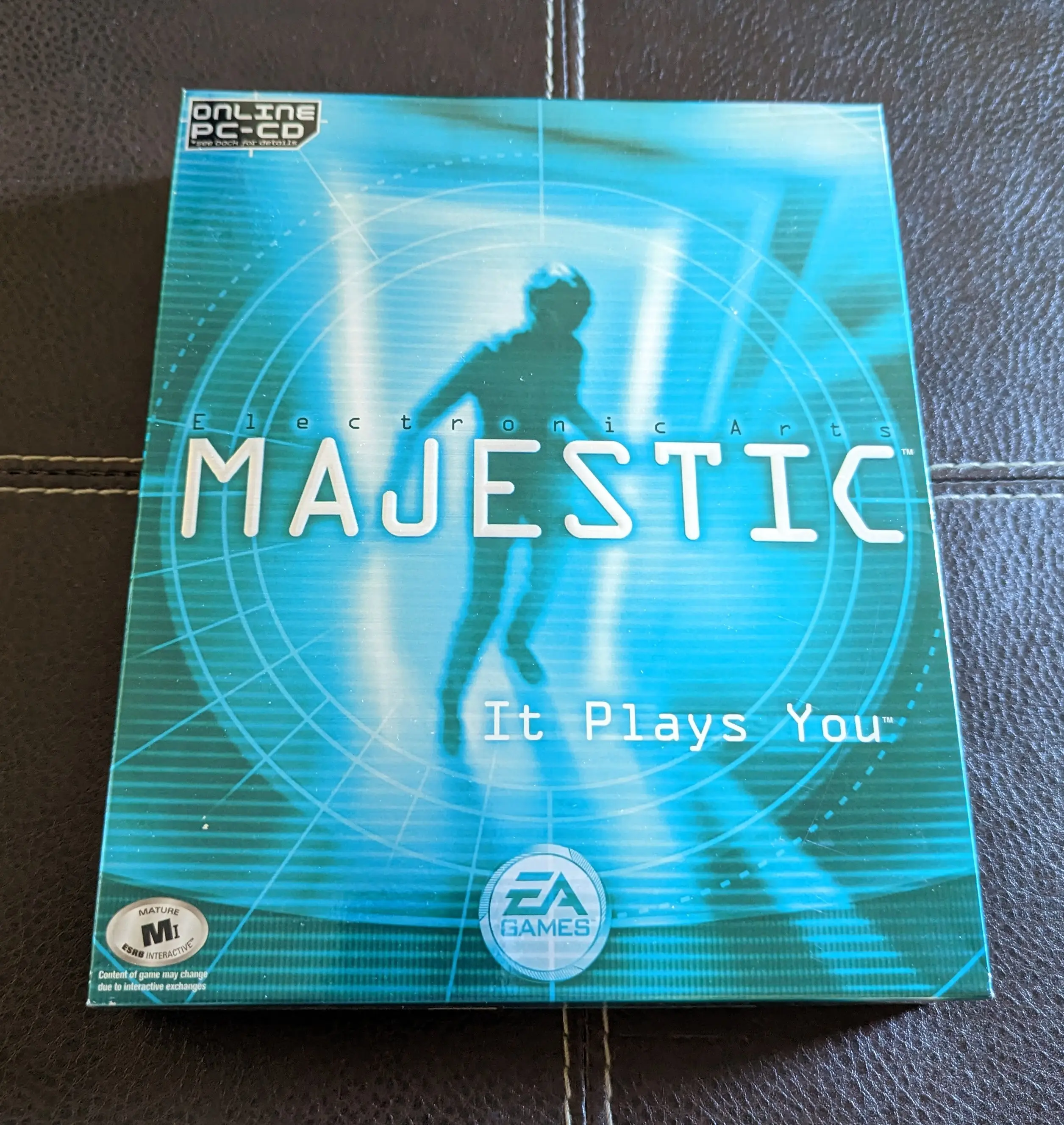
EA would release Majestic in 2001. This is the game that most would probably consider to be the first modern ARG. The game would often require you to send and receive phone calls, AIM messages, e-mails, and had real-world yet fabricated websites which were part of the game.
Majestic was absolutely wild to me. You could receive an e-mail from an in-game character telling you they'd call you tomorrow at 4:00pm. You could then expect a real world phone call the following day at 4:00pm. Hell, when you started playing the game, the game would report that the game had stopped! However, it would then suggest there was a conspiracy afoot and you were now entangled in it.
Unfortunately, Majestic was intended to be a service game. Due to Majestic's poor initial sales, the game never got a second season. However, this game had puzzles, had a wide array of media it was played with, and put you in the role of someone caught up in a deep conspiracy. These are the hallmarks of a modern ARG.
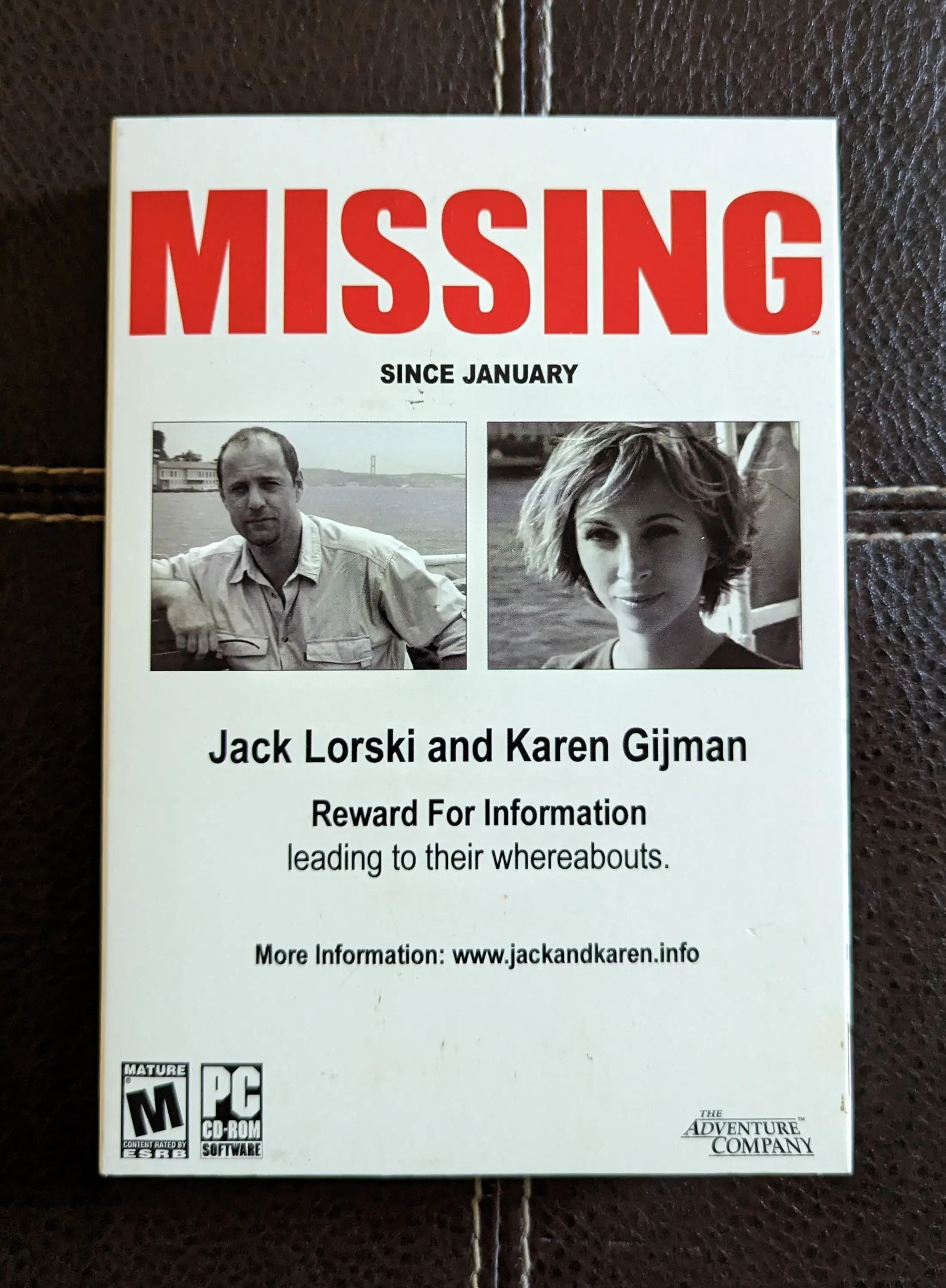
2004 would see the release of Missing: Since January, released by The Adventure Company. This was much like Majestic but real-world interactions were more instantaneous. You wouldn't have to wait until tomorrow to receive an e-mail. The e-mail would come the instant you were expecting a response (If I remember correctly, there was exactly one exception to this in the game)
As an aside, this game stood out to me not just as a great game but I remember it being a really well made Flash game. It came on a CD but the game ran SWF files and was written in ActionScript. It was the first time I was convinced that Flash could really make some magic happen.
One really fun aspect of Missing: Since January is in the presention of the box. A pair of reporters go missing. Their employer receives a mysterious CD in the mail regarding the disappearance of the pair. Being unable to decipher the CD, the employer decides to release the CD to the public, in the hope that the public can help. The game box was designed to look like a missing poster, complete with a seemingly unrelated URL reading, "More Information: www.jackandkaren.info"
I played Missing: Since January with a friend. We sat in front of the screen together and played through the entire game. We would exchange information and ideas during the day and play the game once a week at night. It's one of the most memorable game experiences I've ever had. A pure joy.

2004 would also see the release of perhaps the most famous ARG, I Love Bees. This was a free ARG and required no installation of special software. A bee-keeping site was obstensibly hacked and the owner was asking for help. Players soon began to figure out that this was some sort of game and it led players all over the Internet.
I Love Bees is notable for two things. First, the sophistication of the puzzles. I Love Bees would have players looking at webpage markup, encoding & decoding strings, and many more puzzles that were well above the level of sophistication seen in games like Missing or Majestic. These were really hard puzzles. These were meant to feel real. These were meant for you to collaborate with fellow players.
The other thing I Love Bees is notable for is being a marketing campaign for the release of Halo 2. The wild success of I Love Bees would kick off a flurry of copycat ARGs which also served as marketing campaigns. Most of those would never quite match the appeal of I Love Bees, though.
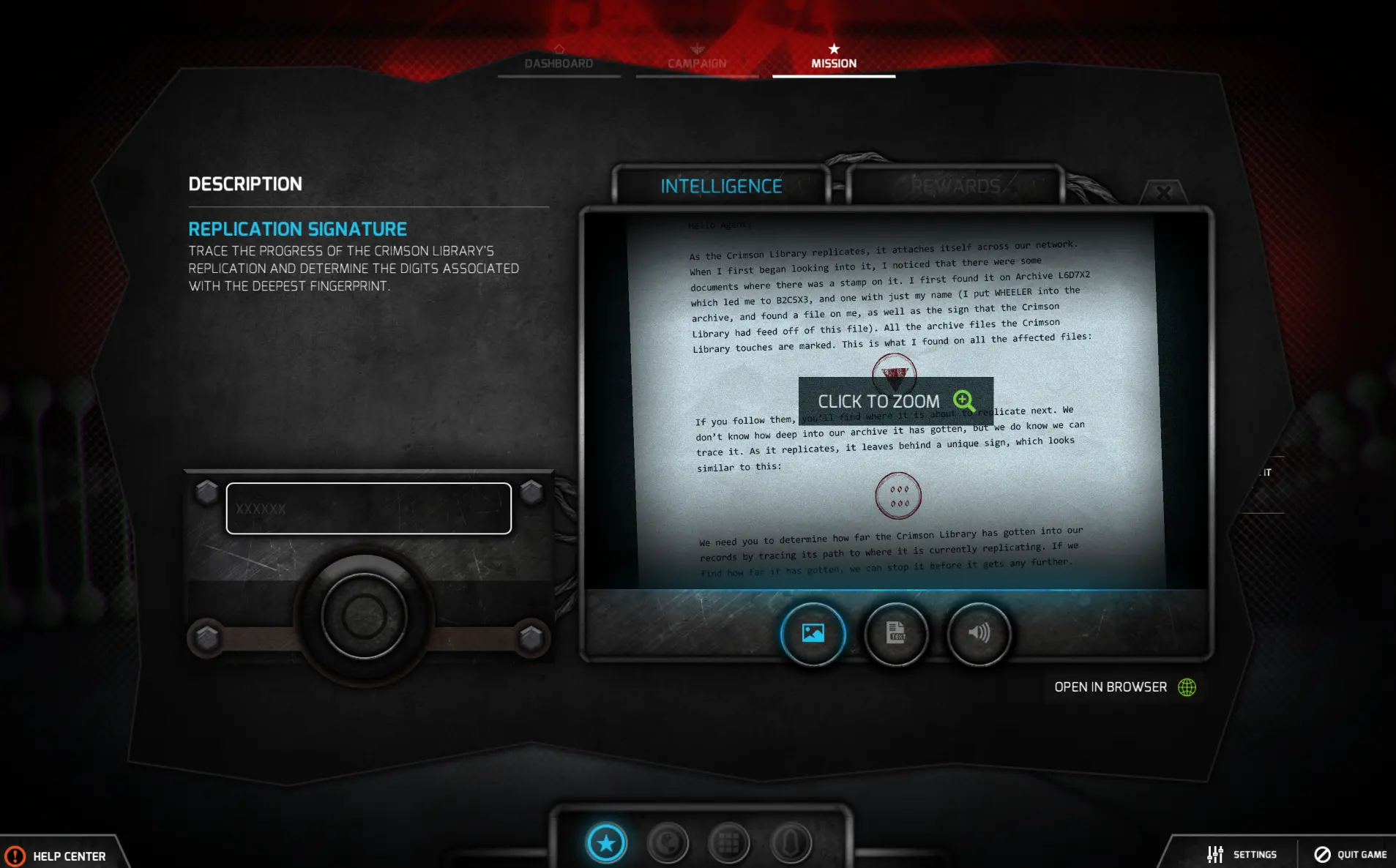
In 2015, Alice & Smith would release The Black Watchmen (TBW) TBW is by far my favorite ARG. TBW was a dedicated game rather than a marketing campaign. However, it was a tie-in with the MMORPG: The Secret World.
In TBW, you played as an agent of The Black Watchmen, a government organization tasked with protecting the public from paranormal events. TBW really took the transmedia approach to a whole new level. There were websites, phone calls with actual actors on the other end of the line, YouTube videos, phony Facebook accounts, real world events, and even live streams with real world game events using actual players.
To facilitate this, Alice & Smith devised a "clearance level" mechanism. This mechanism allowed you to opt-in to whatever level of immersion you wished for. At the highest clearance level, you were required to sign a waiver and provide a doctor's approval to participate. These events could see you confronted in real life by, say, a van of actors portraying villains. It could get very intense!
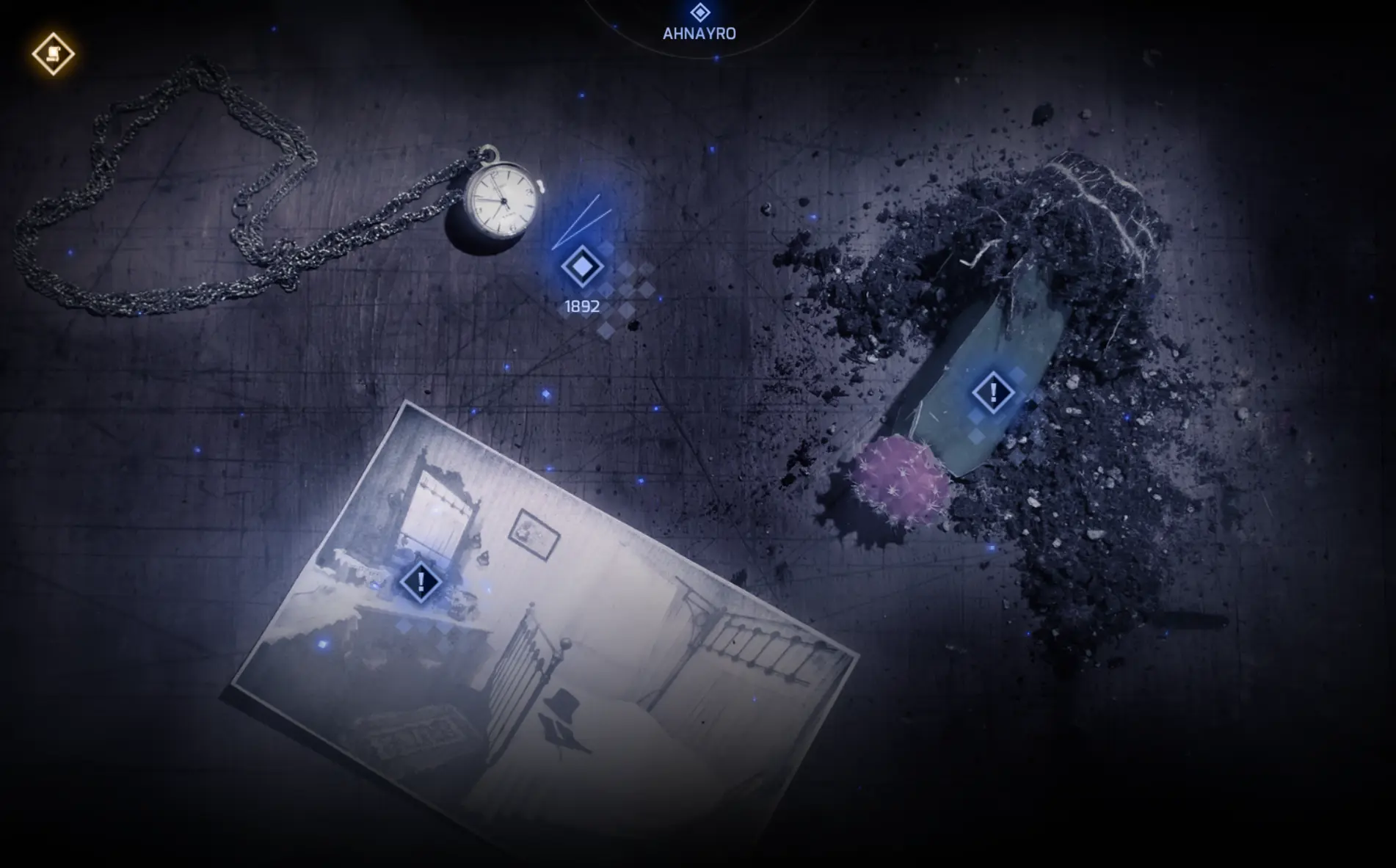
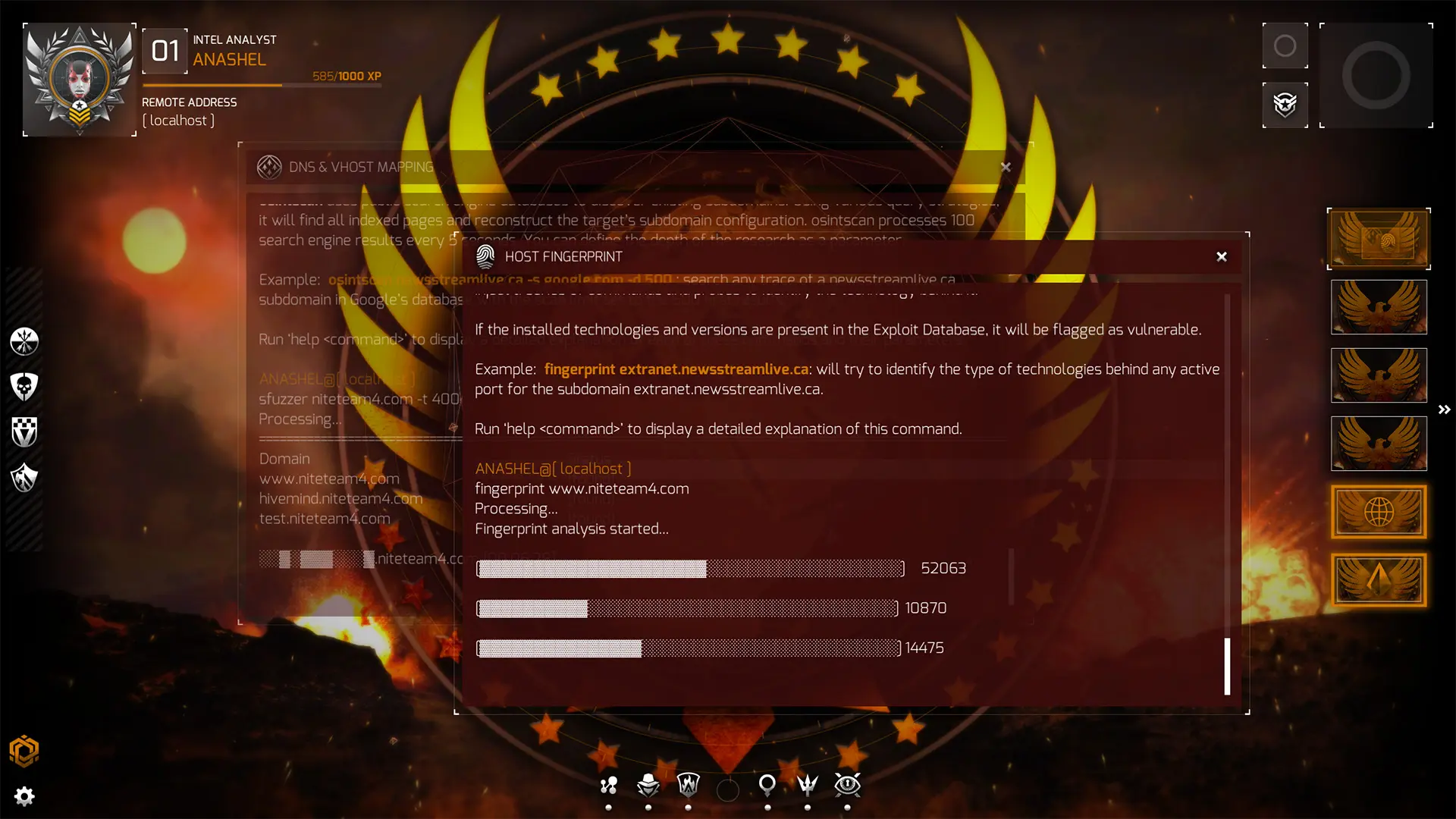
Alice & Smith would follow up with Ahnayro: The Dream World in 2016 and Nite Team 4 in 2019. Neither game would quite see the level of player involvement TBW did. Ahnayro would be more of a strict puzzle game where NITE Team 4 would lean in to the "hacking simulator" concept. Alice & Smith would eventually dial back the interactive events due to privacy and safety concerns. Alice & Smith has since pivoted from a video game company to a "full stack entertainment agency."
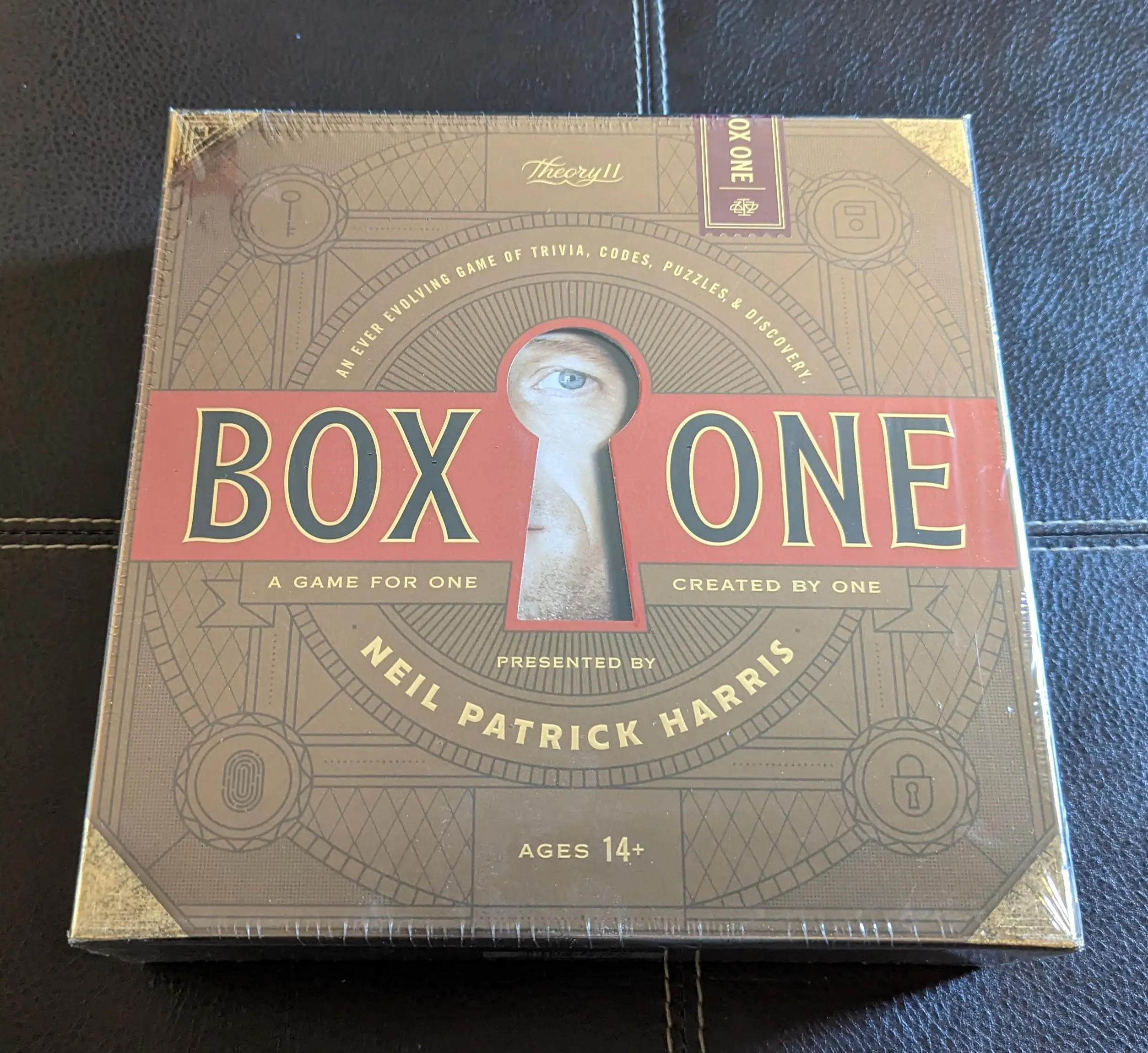
In 2020, theory11 would release Box One, a tabletop game which shares a lot in common with ARGs. You would open the box and be presented with a collection of seemingly unrelated items. A short note would instruct you to start with the cards. The cards would require interaction with other items in the box as well as household items (such as a freezer) Interacting with the items would reveal more things and those things would ultimately lead to sending & receiving e-mails as well as navigating to interactive websites where you had to help someone escape a building (by way of viewing and interacting with prerecorded video clips) The puzzles are lightweight but the whole experience is quite charming.
Big ARGs which encompass lots of different media and play types are few and far between these days. Part of that is today's climate of privacy and safety concerns. Part of that is no doubt in the expense of running an immersive transmedia game. Part of that is that a lot of gamers really don't like the idea of being stuck on a puzzle for days or weeks at a time. I also suspect with the perceived modern prevalance of actual conspiracy theorists, games which deliberately blur the line between fantasy and reality may be considered distasteful or irresponsible by some.
I do miss them, though. It's very nice to see some form of ARG hit major markets every few years. I had a blast with Box One. I really hope we'll continue to see games like this in the future across a wide range of media. With any luck, we'll get to a place where we can see a resurgence of ARGs like Majestic and The Black Watchmen. They're an experience like nothing else.